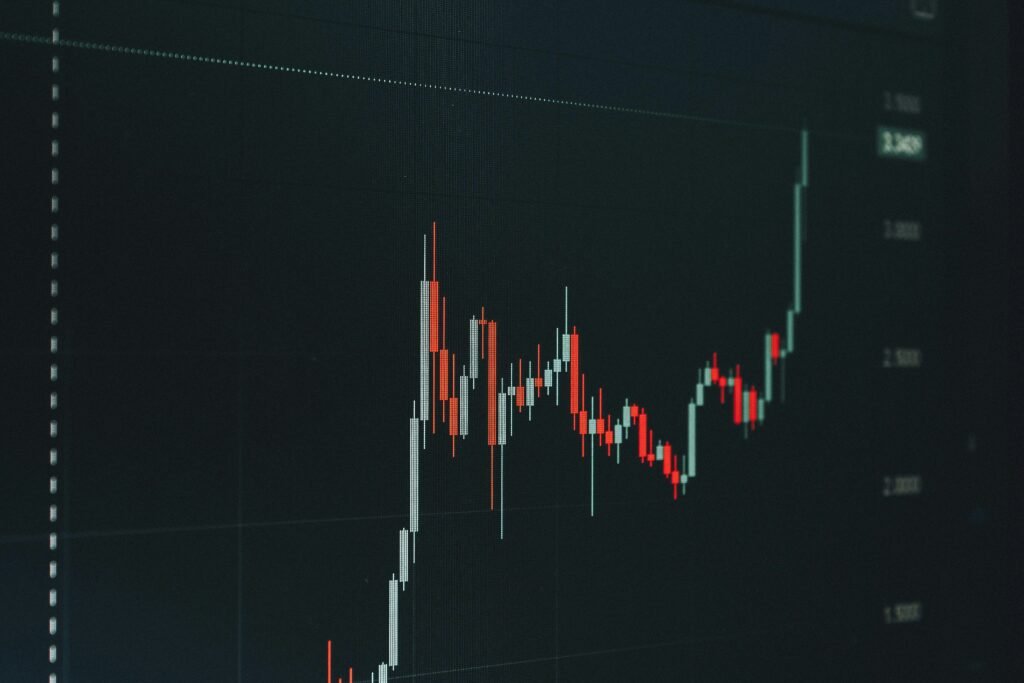
One bad habit wrecks more NQ traders than almost anything else: they see a red candle in an uptrend, call the top, and short straight into the next leg higher. If you want to learn how to read NQ pullbacks, you need to stop treating every pause like a reversal. NQ does not move in a straight line, and if you keep reacting to every wiggle, the market will keep taking your money.
The fix is not more indicators. It is not another guru calling tops and bottoms. It is learning to read pullbacks in context so you know whether price is simply resetting for continuation or actually starting to break down.
How to read NQ pullbacks starts with context
A pullback means nothing by itself. A three-point dip, a ten-point dip, even a sharp flush can all be normal if they happen inside a healthy trend. The first question is not, “Should I buy this?” The first question is, “What is the market doing right now?”
If NQ is making higher highs and higher lows on your execution timeframe and that move is supported by trend structure on the next timeframe up, most pullbacks are continuation opportunities until proven otherwise. If the market is chopping, overlapping, and failing to hold breaks, that same pullback is just noise inside a mess.
This is where traders get trapped. They try to read every candle without first identifying whether they are in trend, range, or transition. That is backward. Structure comes first. Candles come second.
In a clean uptrend, your job is simple. You are not trying to predict the exact low of the pullback. You are trying to recognize when the market is pulling back into an area where buyers are likely to defend. In a downtrend, the logic flips. In chop, the best trade is often no trade.
The three parts of a clean NQ pullback
Most high-quality NQ pullbacks have three things in common. First, there is an obvious impulse move. Price pushes hard in one direction and creates separation from the prior base. Second, the pullback is controlled, not chaotic. Third, the market shows signs of holding at a logical area before continuation.
That sounds simple because it is simple. Traders make it hard by adding clutter.
A strong impulse matters because it tells you one side is in control. If the prior move was weak, sloppy, and full of overlap, then the pullback has less meaning. You do not want to trade retracements in garbage structure and call it discipline.
A controlled pullback usually has smaller candles, less momentum against the trend, and less aggressive follow-through. That is the market pausing, not flipping. When the pullback candles start looking just as strong as the original trend leg, you need to pay attention. That can still lead to continuation, but the trade-off changes. The deeper and more aggressive the pullback, the higher the chance that structure is weakening.
Then comes the hold. This is where many traders jump too early. They see price entering a prior breakout area, VWAP zone, session level, or short-term support and hit buy before the market proves anything. That is guessing. A better read is to wait for the market to show rejection, stabilization, or a clear reclaim. You want evidence that the pullback is ending, not hope that it should end.
Where NQ pullbacks usually hold
NQ respects structure, but not in a clean textbook way every time. This is why rigid traders get punished. The market often overshoots a level, sweeps liquidity, and then turns. So you need zones, not exact lines.
The most useful pullback areas are prior breakout points, prior swing highs or lows, intraday support and resistance, moving averages that the market is already respecting, and session anchors like VWAP. The key is confluence. One random level is weak. A zone where trend structure, a reclaim area, and an intraday reference line all meet is much more meaningful.
You also need to factor in the time of day. A pullback at 9:37 a.m. Eastern does not behave like one at 11:48 a.m. Morning pullbacks are often sharper and faster because order flow is heavier. Midday pullbacks can turn into dead chop. Late-day pullbacks can either continue cleanly or reverse hard as traders flatten out. Context changes everything.
If you are trading prop firm rules or trying to keep drawdown tight, this matters even more. You cannot afford to take every touch of every level. You need the cleaner setups where structure and timing line up.
How to read NQ pullbacks without getting faked out
The market loves to punish early entries. That is why reading the pullback is really about reading behavior at the level, not just the level itself.
If price pulls into support and immediately slices through with expanding candle bodies and volume, that is not a healthy pause. That is pressure. Could it bounce later? Sure. But the clean long is no longer clean. Let somebody else force it.
If price pulls into support, wicks below, then reclaims and starts printing higher lows on the lower timeframe, that is different. Now you are seeing defense. The market tested lower prices and rejected them. That is useful information.
The same idea applies in a downtrend. A bearish pullback should struggle as it retraces. If buyers can push too far, too fast, and hold above key structure, the short becomes weaker. Stop arguing with what price is showing you.
A lot of traders lose money because they confuse a deep pullback with a bargain. NQ is not on sale because it dropped fast. If the market is violating prior structure, failing to reclaim broken levels, and losing trend rhythm, the setup has changed. Your bias should change with it.
Entry timing is where most traders ruin a good read
You can identify the right pullback and still botch the trade by entering too soon. This is why patience pays.
There are a few practical ways to time entries. Some traders enter on the first solid rejection candle off a key area. Others wait for a micro trend shift, like a break of a lower high in a bullish pullback. Others wait for a reclaim of a key line and then use the retest. None of these are magic. The best choice depends on your tolerance for risk and how tight your stop needs to be.
Earlier entries can give better reward-to-risk, but they come with more false starts. Later confirmations reduce guessing, but often mean a wider stop or less upside. That is the trade-off. There is no perfect entry, only a repeatable one you can execute without hesitation.
This is why rules beat emotion. If your process says you only take pullbacks after a strong impulse, into a defined zone, with clear rejection and a structural trigger, then you are no longer freelancing. You are executing.
Risk management matters more than being right
Reading pullbacks well does not mean every trade works. NQ is fast, and it can invalidate a setup in seconds. Your edge comes from avoiding trash setups, managing risk, and pressing only when the structure is clean.
Your stop has to sit where your trade idea is actually wrong, not where it feels comfortable. If you are long a pullback and price loses the zone, fails the reclaim, and breaks the higher low you were using as confirmation, your read may be invalid. Take the loss and move on.
Do not widen the stop because you are emotionally attached to the setup. That is not discipline. That is denial.
Profit targets also need structure. In a trend continuation trade, logical targets are prior highs, measured extensions, or the next major resistance area. If the market is approaching one of those zones and momentum is stalling, paying yourself is not weakness. It is smart trading.
The real goal when you learn how to read NQ pullbacks
The goal is not to catch every move. The goal is to stop taking random entries in random conditions. Once you understand what a healthy pullback looks like, you start filtering out the junk. You stop shorting strong trends just because price dipped. You stop buying weakness just because something looks cheap. You start waiting for structure, confirmation, and a clear reason to act.
That is how consistency starts. Not with more noise, but with less.
At Quantum Navigator, that is the whole point: drop the nonsense and noise, stop bouncing from indicators, and trade with a system that tells you what matters. Pullbacks are not mysterious when you read them through structure, momentum, and confirmation.
If you want to improve fast, pick one session, one timeframe stack, and one pullback pattern. Study it until you can spot the difference between continuation and failure almost on sight. Keep it tight. Keep it repeatable. The market rewards traders who wait for clarity, not traders who chase every candle.