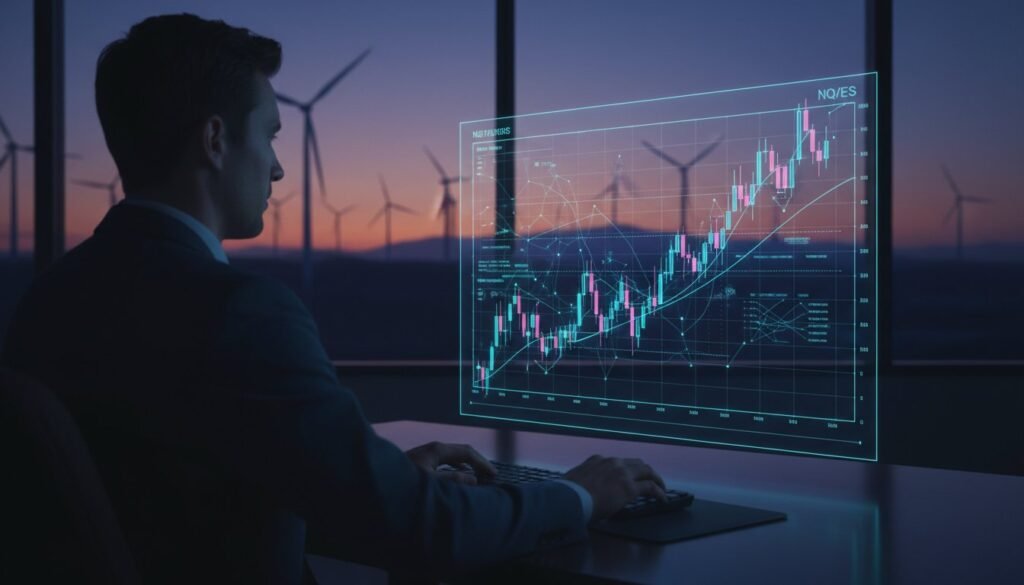
Futures trading, a complex financial instrument, offers significant opportunities alongside considerable risks. Its traditional landscape, characterized by human intuition and limited computational analysis, is undergoing a profound transformation. This article explores the integration of artificial intelligence (AI) into futures trading, examining the mechanisms, benefits, challenges, and future implications of this technological convergence.
To comprehend the impact of AI, one must first grasp the essence of futures trading itself. In essence, a futures contract is an agreement to buy or sell an asset at a predetermined price on a specified future date. This definition, however, only scratches the surface of a multifaceted market.
Contractual Obligations and Standardization
Futures contracts are standardized legal agreements. This standardization, covering aspects like asset quantity, quality, and delivery dates, is crucial for market liquidity and transparency. Unlike forward contracts, which are customized agreements between two parties, futures are exchange-traded, meaning their terms are fixed and universally understood.
Hedging and Speculation
Participants in futures markets generally fall into two categories: hedgers and speculators. Hedgers seek to mitigate price risk. For example, an airline might buy crude oil futures to lock in fuel costs, protecting itself from future price surges. Speculators, on the other hand, aim to profit from price movements. They analyze market trends and attempt to predict future direction, buying contracts they believe will rise in value and selling those they expect to fall.
Leverage and Risk
A key characteristic of futures trading is leverage. Traders are typically required to deposit only a fraction of a contract’s total value as initial margin. This leverage amplifies both potential gains and losses. While a small initial outlay can lead to substantial profits, adverse price movements can result in losses exceeding the initial investment, necessitating careful risk management.
For those interested in enhancing their understanding of futures trading through artificial intelligence, a related article can be found at this link: QN Trader User Videos. This resource provides valuable insights and practical examples of how AI can be leveraged in futures trading, helping traders make more informed decisions and optimize their strategies.
AI’s Entry into the Trading Arena
AI is not a monolithic entity; it encompasses a range of technologies, each offering distinct capabilities pertinent to financial markets. Its application in futures trading represents a paradigm shift, moving beyond conventional quantitative methods.
Machine Learning Algorithms
At the core of AI’s presence in trading are machine learning (ML) algorithms. These algorithms excel at pattern recognition within vast datasets. Unlike traditional programmed rules, ML models learn and adapt from experience, improving their predictive capabilities over time.
Supervised Learning for Price Prediction
Supervised learning, where models are trained on labeled datasets, is commonly employed for predicting future price movements. Historical price data, along with various financial indicators, serve as input, while subsequent price changes act as the labels. Algorithms like support vector machines (SVMs), random forests, and neural networks are trained to identify relationships between these inputs and outputs.
Unsupervised Learning for Anomaly Detection
Unsupervised learning, which works with unlabeled data, is valuable for detecting anomalies or novel patterns in market behavior. This can include identifying unusual trading volumes, sudden price spikes, or subtle shifts in market sentiment that might precede larger movements. Clustering algorithms, for instance, can group similar market scenarios, highlighting deviations from established patterns.
Natural Language Processing (NLP)
The financial world is awash with textual information, from news articles and company reports to social media discussions. NLP enables AI systems to process and understand this unstructured data, extracting sentiment and identifying relevant information.
Sentiment Analysis from News Feeds
NLP models can analyze financial news feeds, social media, and analyst reports to gauge market sentiment. A sudden surge in negative sentiment regarding a specific commodity could indicate potential downward pressure on its futures prices, informing trading decisions. This moves beyond simple keyword searches, understanding the nuanced meaning within text.
Extracting Structured Data from Unstructured Text
Beyond sentiment, NLP can extract specific data points from unstructured text, such as earnings announcements, geopolitical events, or regulatory changes. This structured information can then be fed into other ML models to enhance their predictive accuracy.
Reinforcement Learning for Strategy Optimization
Reinforcement learning (RL) differs from supervised and unsupervised learning by focusing on an agent learning to make optimal decisions through trial and error in an environment. In the context of trading, the “agent” is the AI system, and the “environment” is the futures market.
Learning Optimal Trading Policies
RL algorithms can be trained to develop and refine trading strategies directly. By setting up a simulated trading environment, the agent executes trades, receives rewards for profitable actions, and penalties for losses. Through countless iterations, the agent learns to optimize its trading policy to maximize returns while managing risk. This can lead to the discovery of highly complex and adaptive strategies that human traders might overlook.
Advantages of AI in Futures Trading

The integration of AI offers substantial advantages over traditional methods, fundamentally altering the execution, analysis, and risk management within futures markets.
Enhanced Predictive Accuracy
AI’s ability to process and analyze vast datasets, far exceeding human capacity, leads to more nuanced and potentially accurate predictions. This is like moving from navigating with a basic compass to a sophisticated GPS system with real-time traffic updates.
Identifying Subtle Market Patterns
Human traders often rely on established technical indicators or fundamental analysis. AI, however, can uncover subtle, complex patterns in market data – correlations between seemingly unrelated assets, lagged effects of economic indicators, or micro-structural market dynamics – that are invisible to the unaided human eye.
Adapting to Changing Market Conditions
Unlike static trading rules, AI models can continuously learn and adapt to evolving market conditions. A model trained on historical data might adjust its parameters in real-time as new information emerges, such as unexpected geopolitical events or sudden shifts in supply and demand.
Algorithmic Trading and Speed
The pace of futures trading is relentless. Decisions often need to be made in fractions of a second. AI-powered algorithms execute trades with speed and precision that humans cannot match.
High-Frequency Trading Strategies
AI is a cornerstone of high-frequency trading (HFT), where algorithms execute a large number of orders at extremely high speeds. These strategies often exploit minor price discrepancies between markets or respond to order book imbalances within milliseconds.
Reduced Latency and Execution Risk
Automated trading minimizes the latency between identifying a trading opportunity and executing the trade. This reduces execution risk, the possibility that the market moves unfavorably between the decision to trade and the actual trade execution.
Improved Risk Management
AI does not eliminate risk, but it significantly enhances the ability to manage and mitigate it. This is a critical factor for both individual traders and institutional funds.
Real-time Risk Monitoring and Alerts
AI systems can continuously monitor portfolios for potential risks, identifying exposures to specific assets, sectors, or market conditions. They can issue real-time alerts when predefined risk thresholds are approached or breached, allowing for timely intervention.
Stress Testing and Scenario Analysis
Sophisticated AI models can perform advanced stress tests and scenario analyses, simulating the impact of various adverse market events on a portfolio. This provides a more comprehensive understanding of potential vulnerabilities and helps in developing contingency plans.
Challenges and Ethical Considerations

Despite its transformative potential, the widespread adoption of AI in futures trading presents a unique set of challenges and raises significant ethical considerations. No technology is a panacea, and AI in trading is no exception.
Data Dependency and Quality
AI models are only as good as the data they are trained on. Poor quality, incomplete, or biased data can lead to flawed insights and erroneous trading decisions. This is akin to building a magnificent house on a shaky foundation.
Garbage In, Garbage Out
If historical data contains errors or biases, the AI model will learn and perpetuate those flaws. For instance, if a dataset primarily reflects bull markets, an AI model trained on it might struggle to perform effectively during bear markets.
Data Availability and Cleanliness
Acquiring vast quantities of clean, relevant financial data is a significant operational challenge. Data from different sources may need to be integrated, normalized, and pre-processed before it can be effectively used for AI training.
Model Opacity and Interpretability
Many advanced AI models, particularly deep neural networks, are often referred to as “black boxes.” Their decision-making processes can be difficult to
understand or interpret, posing challenges for accountability and regulatory compliance.
Lack of Transparency (The Black Box Problem)
When an AI system makes a particular trading decision, it can be challenging to explain why that decision was made. This lack of transparency can hinder trust, especially in high-stakes environments like financial markets, where rationale is often required.
Regulatory Scrutiny and Explainable AI (XAI)
Regulators are increasingly scrutinizing AI applications in finance. The demand for Explainable AI (XAI) is growing, focusing on developing methods that make AI models more understandable to humans. This is crucial for demonstrating compliance, performing audits, and maintaining accountability.
Market Stability and Systemic Risk
The proliferation of AI-driven trading could introduce new forms of market instability and systemic risk, potentially exacerbating flash crashes or contributing to herd behavior.
Algorithmic Interactions and Feedback Loops
If multiple AI systems, all designed to optimize for similar goals, interact in the market, they could create unintended feedback loops. For example, if several algorithms identify the same buying or selling signal, they could collectively amplify price movements, leading to rapid market shifts.
Flash Crashes and Liquidity Shocks
The speed and interconnectedness of AI trading systems could contribute to flash crashes, sudden and severe market declines that occur in very short periods. These events highlight the potential for AI to dramatically impact market liquidity.
Ethical Implications and Bias
AI, by its nature, reflects the data it is trained on and the objectives it is programmed to achieve. This raises concerns about potential biases and ethical considerations in automated trading.
Bias in Data and Algorithms
If historical market data contains implicit biases, AI models trained on this data might perpetuate or even amplify these biases. For example, if certain demographic groups have been historically disadvantaged in financial markets, an AI system learning from such data could inadvertently contribute to continued inequality.
Fairness and Market Manipulation
The question of fairness in AI trading is paramount. Could AI-driven strategies inadvertently give an unfair advantage to certain participants? What measures are in place to prevent AI from being used for illicit market manipulation, such as pump-and-dump schemes or spoofing?
In the rapidly evolving world of finance, the integration of artificial intelligence in futures trading has become a hot topic among investors and traders alike. A recent article discusses how AI algorithms can analyze market trends and execute trades with remarkable speed and accuracy, significantly enhancing trading strategies. For those interested in exploring the pricing options for AI-driven trading platforms, you can find more information in this detailed guide that outlines various features and benefits. This advancement not only streamlines the trading process but also opens up new opportunities for traders looking to optimize their performance.
The Future Landscape: Human-AI Collaboration
| Metric | Description | Example Value | Unit |
|---|---|---|---|
| Prediction Accuracy | Percentage of correct market direction predictions | 78 | % |
| Average Return per Trade | Mean profit or loss generated per trade | 0.85 | % |
| Sharpe Ratio | Risk-adjusted return measure | 1.45 | Ratio |
| Max Drawdown | Maximum observed loss from a peak to a trough | 12.3 | % |
| Trade Frequency | Number of trades executed per day | 15 | Trades/day |
| Latency | Time delay between signal generation and order execution | 120 | Milliseconds |
| Win Rate | Percentage of profitable trades | 65 | % |
| Model Training Time | Time taken to train the AI model | 3 | Hours |
The future of futures trading is unlikely to be one where AI completely replaces human traders. Instead, a more probable and effective scenario involves a collaborative relationship, leveraging the strengths of both. This represents a synergy, where the whole is greater than the sum of its parts.
Augmented Intelligence (AI + HI)
“Augmented intelligence” refers to AI systems designed to enhance human capabilities rather than replace them. In futures trading, this means AI serving as a powerful co-pilot, providing insights and executing tasks while human oversight remains crucial.
Decision Support Systems
AI can function as a sophisticated decision support system, providing traders with real-time analytics, predictive models, and risk assessments. This allows human traders to make more informed decisions, freeing them from the laborious task of sifting through mountains of data.
Strategic Oversight and Adaptability
Human traders retain the crucial role of strategic oversight. They can interpret complex market narratives, understand geopolitical shifts, and make judgments about market irrationality – factors that AI currently struggles with. Humans also adapt to truly novel, unprecedented events more readily than most AI systems, which rely on historical data.
Democratization of Sophisticated Trading Tools
As AI trading tools become more accessible and user-friendly, they could democratize access to sophisticated trading strategies, currently reserved for large institutional players.
Retail Trader Empowerment
AI could empower retail traders by providing them with tools previously available only to well-funded institutions. This might include advanced analytics platforms, automated execution bots, and personalized risk management systems, leveling the playing field to some extent.
Educational Resources for AI Integration
Alongside the tools, robust educational resources will be necessary to ensure traders understand how to effectively use and interpret AI-driven insights, promoting responsible adoption.
Evolving Regulatory Frameworks
The rapid advancement of AI in finance necessitates the evolution of regulatory frameworks to ensure market integrity, investor protection, and systemic stability.
Adaptive Regulations for Algorithmic Trading
Regulators will need to develop flexible and adaptive regulations that can keep pace with technological change. This might include requirements for algorithm transparency, rigorous testing protocols, and clear lines of accountability for AI-driven trading systems.
International Cooperation on AI Governance
Given the global nature of financial markets, international cooperation will be essential to establish consistent standards and best practices for AI governance in trading, preventing regulatory arbitrage.
In the rapidly evolving landscape of futures trading, the integration of artificial intelligence is becoming increasingly significant. A recent article explores how AI algorithms are transforming trading strategies and enhancing decision-making processes for traders. For those interested in understanding the implications of these advancements, you can read more about it in this insightful piece. Additionally, if you’re concerned about privacy and data security while engaging in futures trading, it’s essential to review the policies outlined in the privacy policy of trading platforms.
Conclusion
The integration of artificial intelligence into futures trading is not merely an incremental improvement; it is a fundamental re-architecting of how these markets operate. From enhancing predictive accuracy and accelerating trade execution to fortifying risk management, AI offers compelling advantages that are reshaping the landscape. Yet, like any powerful technology, AI introduces its own set of complexities, including challenges related to data quality, model interpretability, and potential systemic risks. The path forward involves embracing AI as a powerful tool, fostering a collaborative environment between human expertise and machine intelligence, and diligently addressing the ethical and regulatory considerations that arise. The revolution has begun, and understanding its nuances is key to navigating the futures markets of tomorrow.
FAQs
What is futures trading AI?
Futures trading AI refers to the use of artificial intelligence technologies, such as machine learning algorithms and data analytics, to analyze market data and make trading decisions in futures markets. It aims to improve accuracy, speed, and efficiency in trading futures contracts.
How does AI improve futures trading?
AI improves futures trading by processing large volumes of historical and real-time market data to identify patterns, trends, and potential trading opportunities. It can execute trades automatically based on predefined strategies, reduce human error, and adapt to changing market conditions faster than traditional methods.
What types of AI techniques are used in futures trading?
Common AI techniques used in futures trading include machine learning, deep learning, natural language processing, and predictive analytics. These methods help in forecasting price movements, sentiment analysis, risk management, and optimizing trade execution.
Are there risks associated with using AI in futures trading?
Yes, risks include model overfitting, reliance on historical data that may not predict future events accurately, technical failures, and market volatility that AI systems may not fully anticipate. Additionally, automated trading can lead to rapid losses if not properly monitored.
Is futures trading AI suitable for all investors?
Futures trading AI is generally more suitable for experienced traders and institutional investors who understand the complexities of both futures markets and AI technologies. Novice investors should approach with caution and consider seeking professional advice before using AI-driven trading systems.