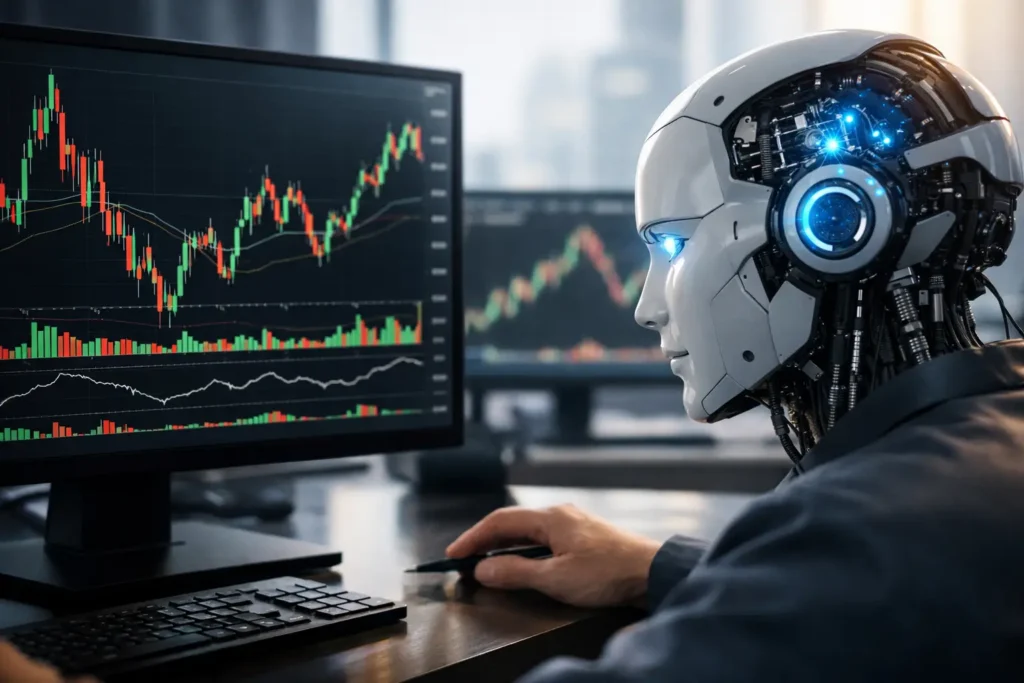
Futures trading, a sophisticated financial instrument, involves agreements to buy or sell an asset at a predetermined price on a future date. Implementing algorithms into this domain offers potential for enhanced decision-making and execution, aiming to capitalize on market inefficiencies and trends. This article explores the principles, methodologies, and considerations for maximizing profits using futures trading algorithms.
Futures contracts are standardized agreements that obligate the holder to buy or sell an asset at a specified price and date. These assets can range from commodities like crude oil and gold to financial instruments such as stock indices and currencies. The primary distinction from spot markets is the deferred settlement, which introduces elements of speculation and hedging.
Algorithmic trading, often referred to as algo-trading, involves using computer programs to execute trades based on predefined sets of rules. These rules can encompass various factors, including price, volume, and technical indicators. The speed and precision offered by algorithmic strategies can be a significant advantage in the fast-paced futures markets.
The Role of Leverage in Futures Trading
Futures contracts are typically traded on margin, meaning a relatively small amount of capital can control a large position. This inherent leverage amplifies both potential gains and losses. While it offers an attractive proposition for profit maximization, it also necessitates robust risk management strategies within algorithmic frameworks. A small price movement in an underlying asset can result in substantial profit or loss on the leveraged futures position.
Benefits of Algorithmic Execution
Algorithmic execution offers several advantages over manual trading. These include:
- Speed: Algorithms can react to market events and execute trades far faster than human traders. This is critical for high-frequency strategies where milliseconds can impact profitability.
- Precision: Trades are executed according to exact specifications, eliminating human error in order placement.
- Backtesting Capability: Algorithms can be tested against historical data to evaluate their performance under various market conditions before deployment. This allows for iterative refinement and optimization.
- Reduced Emotional Bias: Trading decisions are based on objective rules rather than subjective human emotions like fear or greed, which can lead to suboptimal outcomes.
Futures trading algorithms have gained significant attention in recent years due to their ability to analyze vast amounts of market data and execute trades with precision. For those looking to deepen their understanding of this topic, a related article can be found at QN Trader FAQ, which provides insights into the mechanics of trading algorithms and their impact on the futures market. This resource is invaluable for both novice and experienced traders seeking to enhance their trading strategies.
Developing a Robust Algorithmic Strategy
The foundation of profitable algorithmic futures trading lies in the development and rigorous testing of a robust trading strategy. This involves defining entry and exit signals, risk parameters, and position sizing rules.
Strategy Conception and Idea Generation
Strategy conception often begins with identifying potential market inefficiencies or recurring patterns. This could involve analyzing historical data, researching academic papers, or observing market behavior. For instance, a strategy might aim to capitalize on mean reversion in a particular commodity future or trend following in an equity index future.
Data Acquisition and Preprocessing
Accurate and comprehensive data is the lifeblood of any algorithmic strategy. This includes historical price data (tick, minute, daily), volume data, and potentially fundamental economic indicators. Data cleaning and preprocessing are crucial steps to ensure data quality, addressing issues like missing values, outliers, and incorrect timestamps. Inaccurate data can lead to erroneous strategy conclusions, much like building a house on a shifting foundation.
Backtesting and Optimization
Backtesting involves simulating the strategy’s performance on historical data to assess its profitability and risk characteristics. During this phase, key performance indicators (KPIs) such as total return, maximum drawdown, Sharpe ratio, and Sortino ratio are evaluated. Optimization involves adjusting strategy parameters to enhance performance. However, care must be taken to avoid “overfitting,” where a strategy performs exceptionally well on historical data but fails in live trading due to excessive parameter tuning to past market noise, akin to tailoring a suit to fit a ghost.
Paper Trading and Forward Testing
Before deploying an algorithm with real capital, paper trading (simulated trading) or forward testing on live data without real money is essential. This allows the strategy to be tested in real-time market conditions, including latency, slippage, and unexpected market events, without incurring financial risk. It acts as a bridge between the historical backtest environment and live execution.
Key Algorithmic Trading Strategies for Futures

Various algorithmic strategies are employed in futures trading, each with its own characteristics and applicability to different market conditions.
Trend Following Strategies
Trend-following strategies aim to profit from sustained price movements in one direction. These algorithms typically identify trends using indicators like moving averages, MACD (Moving Average Convergence Divergence), or directional movement index (DMI). When a strong trend is detected, the algorithm takes a position in the direction of the trend and holds it until a reversal signal emerges.
- Moving Average Crossover: This popular approach involves generating buy signals when a shorter-term moving average crosses above a longer-term moving average, and sell signals when the opposite occurs.
- Momentum Indicators: Strategies might integrate momentum indicators like the Relative Strength Index (RSI) to gauge the strength of a trend and identify potential overbought or oversold conditions.
Mean Reversion Strategies
Mean reversion strategies operate on the premise that prices tend to revert to their historical average over time. These algorithms identify instances where prices have deviated significantly from their mean and then place trades expecting a return to the average.
- Bollinger Bands: Prices trading outside a Bollinger Band might trigger a mean reversion trade, anticipating a move back towards the middle band.
- Z-score of Price Series: Calculating the z-score of a price series (how many standard deviations a price is from its mean) can identify extreme deviations suitable for mean reversion plays.
Arbitrage Strategies
Arbitrage strategies seek to exploit price discrepancies between similar assets or markets. In futures, this can involve identifying mispricings between different delivery months of the same commodity future (calendar arbitrage) or between the futures contract and its underlying spot asset (cash and carry arbitrage). These strategies are often fleeting, requiring extremely fast execution.
- Calendar Arbitrage: Simultaneously buying a futures contract in one month and selling a futures contract in another month for the same underlying asset, anticipating the spread to converge.
- Index Arbitrage: Exploiting temporary price differences between a stock index future and the basket of underlying stocks it represents.
High-Frequency Trading (HFT)
High-frequency trading involves executing a large number of trades at extremely rapid speeds, often leveraging minimal price discrepancies or capitalizing on order flow imbalances. HFT strategies typically involve co-location with exchange servers and sophisticated infrastructure to minimize latency. These are often market-making or statistical arbitrage strategies.
- Market Making: Simultaneously placing limit buy and sell orders, profiting from the bid-ask spread.
- Latency Arbitrage: Exploiting minor price delays between different exchanges.
Risk Management and Position Sizing
Effective risk management is paramount in futures trading, especially given the leverage involved. An algorithm’s profitability can be entirely undermined by inadequate risk controls.
Defining Risk Tolerance
Before any strategy deployment, a clear understanding of the maximum acceptable loss is essential. This defines the overall risk tolerance for the trading capital. This risk tolerance influences all subsequent risk management parameters.
Stop-Loss and Take-Profit Orders
Algorithms should incorporate predefined stop-loss orders to limit potential losses on individual trades and take-profit orders to lock in gains. These can be fixed price levels, trailing stops, or dynamically adjusted based on market volatility. A robust stop-loss acts as an essential safety net, preventing small losses from escalating into catastrophic ones, akin to a circuit breaker preventing electrical overload.
Position Sizing Techniques
Position sizing determines the number of contracts to trade based on the available capital and the risk per trade. Common methods include:
- Fixed Fractional (Kelly Criterion): A more aggressive approach that calculates the optimal fraction of capital to risk per trade. While theoretically maximizing long-term wealth, it can lead to high volatility and significant drawdowns.
- Fixed Risk per Trade: Allocating a fixed percentage of capital (e.g., 1-2%) to be risked on each trade. This ensures that no single loss significantly impairs the trading capital.
- Volatility-Adjusted Position Sizing: Adjusting position size based on the historical or implied volatility of the underlying asset. Higher volatility might lead to smaller position sizes to maintain a consistent risk exposure. This is like adjusting sail area based on wind strength – less sail in strong winds, more in light.
Drawdown Management
Drawdown refers to the peak-to-trough decline in an account’s value. Algorithms should have mechanisms to manage drawdowns, such as stopping trading if a certain drawdown threshold is breached or reducing position sizes during periods of underperformance. This prevents compounding losses and provides a pause for strategy re-evaluation.
Futures trading algorithms have become increasingly sophisticated, allowing traders to leverage advanced technology for better decision-making. A related article discusses the importance of AI trading indicators and how they serve as precision tools for navigating the NQ and ES markets. For more insights on this topic, you can read the full article here. By integrating these indicators into their strategies, traders can enhance their ability to analyze market trends and improve their overall performance.
Technological Infrastructure and Execution Considerations
| Metric | Description | Typical Range | Importance |
|---|---|---|---|
| Win Rate | Percentage of profitable trades | 40% – 70% | High |
| Profit Factor | Ratio of gross profit to gross loss | 1.2 – 3.0 | High |
| Sharpe Ratio | Risk-adjusted return measure | 1.0 – 3.0 | High |
| Max Drawdown | Maximum observed loss from a peak | 5% – 20% | High |
| Average Trade Duration | Average time a trade is held | Seconds to days | Medium |
| Slippage | Difference between expected and actual trade price | 0.01% – 0.1% | Medium |
| Latency | Time delay in order execution | Microseconds to milliseconds | High |
| Trade Frequency | Number of trades executed per day | 10 – 1000+ | Medium |
The effectiveness of futures trading algorithms is heavily reliant on the underlying technological infrastructure and efficient execution.
Connectivity and Latency
Direct market access (DMA) and low-latency connectivity to exchange servers are crucial for algorithmic trading, particularly for high-frequency strategies. Even microsecond delays can impact profitability in competitive markets. Co-location, where servers are physically located within or very close to the exchange’s data center, is often employed to minimize network latency.
Programming Languages and Platforms
Common programming languages for algorithmic trading include:
- Python: Widely used due to its extensive libraries for data analysis (Pandas, NumPy), scientific computing (SciPy), and machine learning (Scikit-learn, TensorFlow). Its readability and large community support make it a popular choice.
- C++: Favored for high-frequency trading due to its speed and performance. It allows for fine-grained control over hardware and memory.
- Java: Offers cross-platform compatibility and strong enterprise-level support, often used for larger trading systems.
Trading platforms or execution management systems (EMS) provide the interface for connecting algorithms to brokers and exchanges, handling order routing, market data feeds, and position management.
Monitoring and Error Handling
Automated monitoring systems are essential to track algorithm performance, system health, and market data integrity in real-time. Robust error handling mechanisms are necessary to address unexpected market conditions, connectivity issues, or code errors, preventing unintended trades or system failures. Alarms and alerts should be configured to notify traders of critical events.
Conclusion
Maximizing profits with futures trading algorithms is an endeavor that combines financial understanding, statistical analysis, and robust technological implementation. It requires a systematic approach to strategy development, rigorous backtesting, careful risk management, and reliable execution. While the allure of automation and potential for significant returns is strong, the inherent leverage in futures contracts and the dynamic nature of financial markets necessitate continuous vigilance and adaptation. A well-constructed algorithm, underpinned by sound principles and meticulous execution, can serve as a powerful tool in navigating the complexities of futures markets. However, it is not a magic bullet; rather, it is a sophisticated instrument requiring skilled orchestration to yield consistent results.
FAQs
What are futures trading algorithms?
Futures trading algorithms are computer programs designed to automatically execute trades in the futures markets based on predefined criteria and strategies. They analyze market data, identify trading opportunities, and place orders without human intervention.
How do futures trading algorithms work?
These algorithms use mathematical models and historical data to predict price movements and market trends. They process real-time market information, apply trading rules, and execute buy or sell orders at optimal times to maximize profits or minimize risks.
What are the benefits of using futures trading algorithms?
The main benefits include increased trading speed, reduced emotional bias, consistent execution of strategies, and the ability to process large volumes of data quickly. Algorithms can also operate 24/7, allowing traders to capitalize on market opportunities around the clock.
Are there risks associated with futures trading algorithms?
Yes, risks include technical failures, incorrect algorithm design, and market conditions that differ from historical patterns used in the algorithm. Additionally, high-frequency trading algorithms can contribute to market volatility, and improper use may lead to significant financial losses.
Who typically uses futures trading algorithms?
Futures trading algorithms are commonly used by institutional investors, hedge funds, proprietary trading firms, and experienced individual traders who seek to automate their trading strategies and improve efficiency in the futures markets.