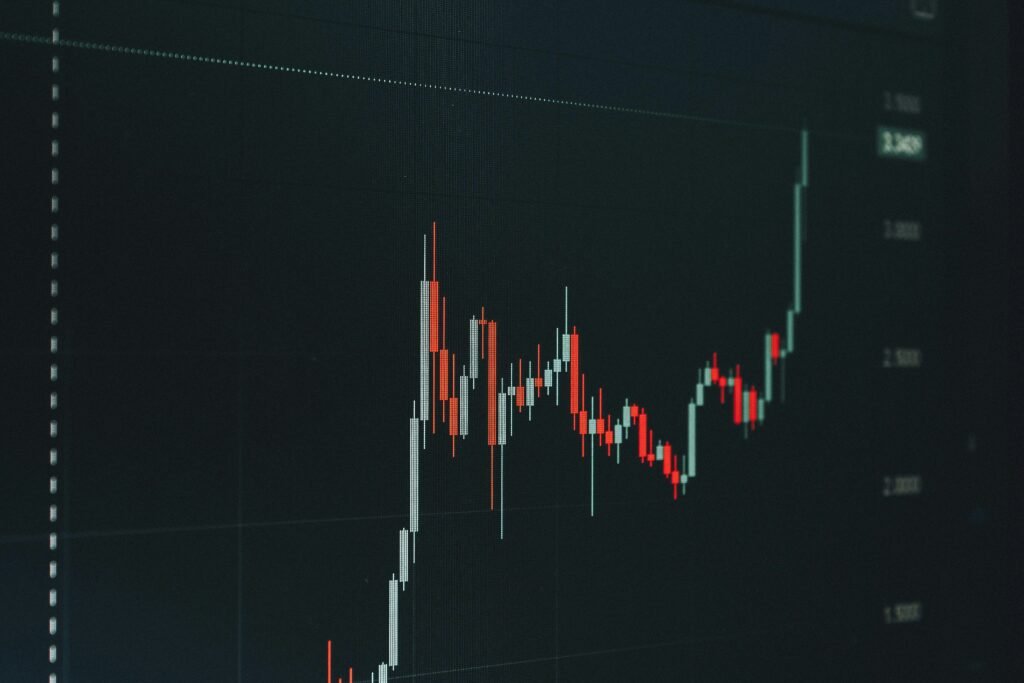
The third NQ trade is often not a setup. It is a reaction. You missed the first move, took a small loss on the second, and now every candle looks like a reason to get back in. That is where accounts get chewed up – not because the trader lacks another indicator, but because there is no boundary between a valid opportunity and an emotional click. Can alerts prevent overtrading? They can help dramatically, but only when they are built around rules you are willing to obey.
An alert is not discipline in a box. It cannot stop you from opening an order ticket, moving a stop, or chasing a candle after a losing trade. What it can do is remove the constant chart-watching that feeds impulsive decisions. Used correctly, alerts turn your TradingView chart into a gatekeeper: act when your setup is present, stand down when it is not.
Why Overtrading Hits NQ and ES Traders So Hard
NQ moves fast. That is why scalpers are drawn to it, and it is also why a bad five-minute stretch can turn into a string of low-quality entries. ES may move more methodically, but the same problem shows up around major levels, opening volatility, and news-driven reversals. The market offers endless candles. Your plan should not offer endless trades.
Overtrading usually comes from one of four places: boredom during slow conditions, revenge after a loss, fear of missing a move, or confidence after an early winner. Different emotion, same result. The trader starts taking entries that were never part of the original plan.
Prop firm traders feel this pressure even more. A daily loss limit does not care whether your trades came from a brilliant thesis or frustration. One oversized, late entry can damage a clean evaluation day. Tight drawdown rules demand fewer decisions, not more.
Can Alerts Prevent Overtrading? Only If They Enforce a Plan
A generic price alert will not solve anything. If your alert says, “NQ hit a level,” but you have not defined what confirms an entry, where the stop belongs, or how many attempts are allowed, you have simply created a louder invitation to guess.
The alert needs to represent a complete trade idea. At minimum, that means a location, a trigger, a defined risk point, and a reason to ignore the setup if conditions change. The best alerts do not tell you to trade every time the market moves. They notify you only when the market reaches the area where your rules say attention is justified.
That distinction matters. An alert is a prompt to evaluate a preplanned setup, not an automatic command to hit buy or sell. If your system is rules-based enough, the evaluation may take seconds. If it still takes ten minutes of adding indicators and debating market direction, the alert has not fixed the real problem.
Build Alerts Around Setups, Not Every Tick
Start with the setups you can describe in one sentence. For example: a long only when price pulls back into a defined support zone, confirms direction with your chosen signal, and offers room to the next target. Or a short only after a failed push into resistance with a stop above the invalidation level.
If you cannot state the setup clearly, you cannot alert it clearly. Drop the nonsense and noise. Ten vague conditions across five indicators are not structure. They are a loophole factory for the part of your brain that wants another trade.
On TradingView, alerts work best when connected to clear chart conditions. A price level can alert you to a decision zone. An indicator condition can alert you when your entry logic appears. A combined process is often stronger: first, a level alert tells you to pay attention; then, your rules determine whether the actual trigger is present.
For scalpers, this prevents the most expensive habit of all: staring at every micro-pullback until one looks tradeable. You do not need to participate in every rotation. You need to be ready for your rotation.
Use One Alert for the Setup and One for the Exit Decision
Entry alerts get all the attention, but exit-related alerts can protect discipline too. Set an alert near your target or at a level where the trade thesis should be reassessed. This keeps you from turning a planned scalp into an unplanned hold because you got greedy after a few extra points.
You can also use alerts around invalidation. If price reaches the point where your setup is wrong, the decision should be simple. Honor the stop. Do not negotiate with a fast market because the next candle might rescue the trade.
Put a Hard Cap on Trade Attempts
Alerts are most useful when paired with a daily trade limit. Without a cap, a trader can take five technically valid alerts and still be overtrading for their account size, mental state, or prop firm rules.
Choose a number before the session starts. It might be two full-risk attempts per setup, three total trades for the morning, or one re-entry after a stopped-out trade. The right number depends on your strategy and risk tolerance. The non-negotiable part is deciding it before the first loss or first win changes your judgment.
Once the limit is reached, disable entry alerts or step away from the screen. That sounds basic because it is basic. Most blown days do not happen because traders do not know this rule. They happen because traders leave themselves a loophole: “Just one more because this one looks perfect.”
No. If it was not good enough to include in the morning plan, it is not good enough to invent after your limit is hit.
A simple session journal makes this more effective. Record the alert, whether it matched the rules, whether you took it, and whether it was inside your trade limit. After a week, you will see whether the alerts are filtering bad behavior or simply creating more opportunities to click.
The Biggest Mistake: Treating Every Alert as a Signal
Alerts can create a new problem when traders set too many of them. A chart that fires notifications every few minutes keeps your attention locked on the market and makes inactivity feel like failure. That is not a trading workflow. It is a slot machine with sound effects.
Use fewer, higher-quality alerts. If your phone or desktop is constantly buzzing, your criteria are too broad. The goal is not to be first into every move. The goal is to be selective enough that each notification means something.
This is where a rules-based visual system can cut through the clutter. Quantum Navigator is built around defined entries, stops, and targets so traders are not bouncing from indicators or rebuilding a trade thesis in the middle of a volatile NQ candle. The chart should reduce decision friction, not add more of it.
Still, no tool replaces risk control. A clean alert can identify a high-probability opportunity and the trade can still lose. That is normal. Overtrading starts when a normal loss becomes an argument with the market.
A Practical Alert Routine Before the Open
Before the cash open or your chosen trading window, mark the levels that matter. Identify your directional context, the zones where your setups are valid, and the times you will not trade, such as major scheduled news if that is outside your plan. Then set only the alerts connected to those locations and conditions.
Next, write down your maximum daily loss, maximum trade count, and the exact action you will take when either limit is reached. Do not leave this as a mental promise. A written rule is harder to rewrite when emotions show up.
When an alert fires, use the same short checklist every time: Is this one of my predefined setups? Is the entry trigger actually present? Is the stop location clear? Does the trade fit inside my remaining risk and trade limit? If the answer to one of those questions is no, pass.
That pause is the value. It creates a gap between stimulus and execution. For an overtrader, that gap can be worth more than another indicator, another Discord alert, or another guru’s opinion.
Alerts will not make a trader patient by themselves. But they can make patience easier by shifting your job from hunting random movement to waiting for defined conditions. Build them around a real plan, limit the number of attempts, and let silence do part of the work. A quiet chart is not missed opportunity. Sometimes it is the discipline that keeps your next good setup funded.