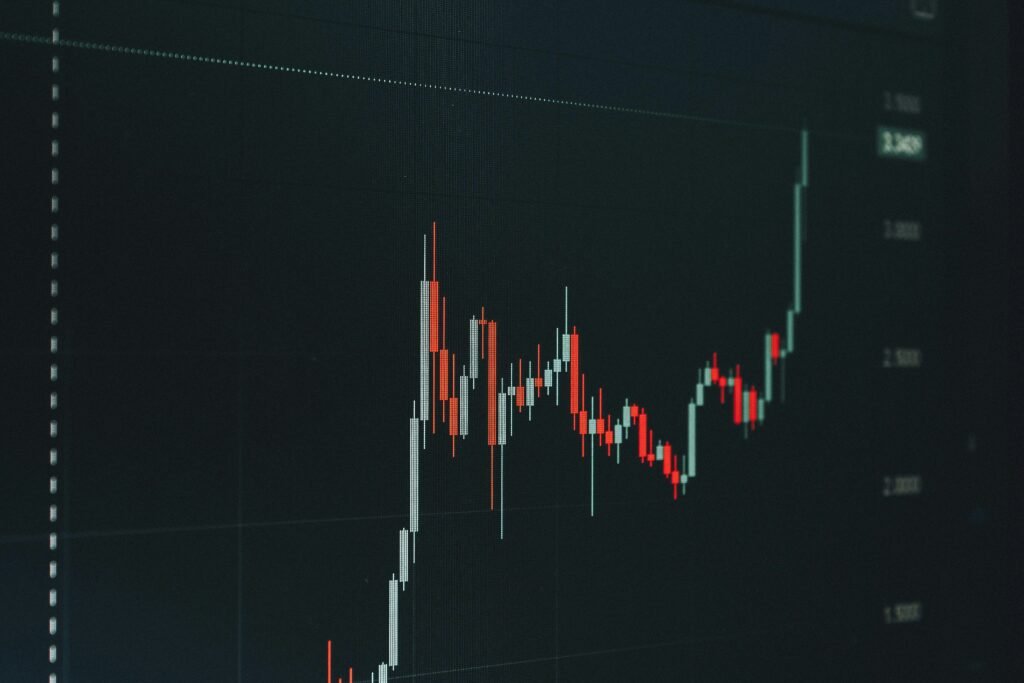
The NQ can move 20 points while you are still deciding whether a pullback is real. That is exactly why a systematic NQ trading plan matters. If your process is based on chasing candles, changing indicators every week, or taking a trade because a chat room got excited, you do not have a plan. You have a reaction.
NQ trading rewards speed, but it punishes impulsiveness. The answer is not more screens, more alerts, or another guru’s favorite oscillator. Drop the nonsense and noise. Build a repeatable framework that tells you what to trade, when to trade it, how much you can lose, and when you are done for the day.
What a Systematic NQ Trading Plan Actually Does
A systematic plan does not mean every market day looks the same. NQ is volatile, news-sensitive, and capable of turning a clean trend into a whipsaw session in minutes. It means your decisions are made before money is on the line.
Your plan should define the market conditions you will trade, the setup that qualifies, the entry trigger, the invalidation point, the profit objective, and the maximum loss you will accept. When those pieces are vague, emotions fill the gap. Traders call it intuition after a winner and bad luck after a loser. Usually, it is just inconsistency.
The goal is not to predict every tick. The goal is to recognize a small number of high-quality situations and execute them the same way every time. That is how you stop turning a one-contract loss into a revenge-trading disaster.
For prop firm traders, this is not optional. A good setup with bad risk control can still violate a trailing drawdown rule. A modest, repeatable setup with disciplined sizing can keep you alive long enough to build consistency.
Start With a Narrow Trading Window
NQ trades differently at different times of day. The opening minutes can deliver powerful momentum and violent reversals. Midday often slows down, then the final hours can bring another wave of institutional activity. Trying to trade every phase with one approach is a fast way to force low-quality entries.
Pick one or two windows and own them. Many traders focus on the first 60 to 90 minutes after the cash open because volume and direction are easier to identify. Others prefer a later session because they want cleaner structure and fewer opening spikes. Neither choice is automatically better. The best window is the one you can watch consistently and test honestly.
Set a rule such as: trade only from 9:30 a.m. to 11:00 a.m. Eastern, or trade only the afternoon continuation window. Outside that window, you observe, journal, or walk away. You do not manufacture a setup because you are bored.
Define the Market Context Before Looking for an Entry
An entry signal without context is just a blinking light. Before the session begins, mark the levels that can matter: prior day high and low, overnight high and low, the cash open, major swing levels, and obvious areas of consolidation.
Then answer one question: is NQ trending, balancing, or breaking from a range?
In a trend, your highest-probability opportunity may be a pullback that holds above a key level in an uptrend, or below one in a downtrend. In a balanced market, fading the edges of a defined range may make more sense. During a breakout, you need proof that price can hold beyond the level rather than instantly snap back into the range.
This is where many traders sabotage themselves. They use the same long setup in a clean downtrend, a choppy range, and directly beneath resistance. The chart may show the same candle pattern, but the trade is not the same.
A rules-based TradingView workflow can help reduce this decision friction. Instead of stacking five indicators and hoping they agree, use chart tools that identify your predefined setup and support the context you already mapped. Quantum Navigator is built around that kind of disciplined, visual process: fewer moving parts, clearer execution.
Build One Entry Model You Can Repeat
Do not start with six setups. Start with one. A practical NQ entry model might be a trend pullback: price establishes direction, retraces to a predefined area, holds structure, and then confirms continuation.
Write the entry in plain English. For example: “After NQ makes a higher high and holds above the session open, I will only buy the first pullback into support when a confirmation candle closes back in the trend direction.” That is not a complete strategy until you define the exact support zone and confirmation rule, but it is far better than “buy dips.”
Your entry rules must be objective enough that two versions of you – calm you and stressed you – would take the same trade. If you cannot identify the setup in a screenshot after the fact, it is too subjective to trade with size.
Avoid entering in the middle of a large expansion candle. NQ loves to lure traders into late entries, then punish them with a fast pullback. Let price come to your area. Missing a move is cheaper than buying the top of a five-minute impulse.
Put the Stop Where the Trade Is Wrong
A stop is not a random number of points. It is the price where your trade idea is invalidated.
If you are long because a pullback should hold above a support level, your stop belongs beyond the level that proves buyers failed. If the stop needs to be so wide that one loss damages your daily limit, skip the trade or reduce size. Never move a stop farther away simply because you do not want to be wrong.
NQ point value and contract size matter here. One point in the standard NQ contract is worth $20, while one point in Micro NQ is worth $2. A 25-point stop has a very different impact depending on the contract you trade. Calculate the dollar risk before entry, not after the market moves against you.
A simple risk rule can keep your plan grounded: risk a fixed amount per trade, then stop trading after a predetermined number of full losses. For example, if your daily limit is $300, risking $100 per attempt gives you room for three controlled losses. That is not exciting. It is how you avoid one emotional session wrecking a week of work.
Make Profit Targets Logical, Not Emotional
Targets should come from market structure and reward-to-risk, not from the amount you “need” to make. Prior highs, lows, range boundaries, and unfilled moves can provide logical target areas.
You might take partial profit at 1R – the same amount you initially risked – then hold the remainder toward the next structural level. Or you might use a fixed 2R target when your testing shows the setup performs better that way. There is no universal answer. A runner can produce bigger days in a trend, but it also gives back open profit during chop. Fixed exits are simpler, but they can leave money on the table when NQ runs.
Pick one management method for your setup and collect data. Do not take quick profits after a loss, then hold forever after a winner because you are suddenly feeling fearless.
Create Non-Negotiable Daily Guardrails
Your system needs rules for the days when you are not at your best. The market does not care that you slept badly, missed a prior move, or need to pass a prop evaluation by Friday.
Use guardrails that remove the chance of a spiral:
- A maximum daily dollar loss
- A maximum number of trades
- A stop-after-two-losses rule, if losses come from valid setups
- A rule against adding to a losing position
- A no-trade rule around major scheduled economic releases, unless that is specifically your tested setup
These rules are not signs of fear. They are professional damage control. The fastest way to lose confidence is to keep trading after your process has already told you to stop.
Review the Process, Not Just the P&L
A winning trade can be poorly executed. A losing trade can be a perfect execution of a valid setup. If you judge your plan only by today’s P&L, you will constantly rewrite it at the worst possible time.
After each session, save screenshots and record the context, setup, entry, stop, target, result, and whether you followed the rules. After 20 to 30 trades, patterns become visible. Maybe your opening-range entries work while midday trades drain you. Maybe your stop is correct, but your target is unrealistic in balanced conditions. That is useful information. Random indicator hopping is not.
A systematic NQ trading plan will not remove losses, and anyone promising that is selling fantasy. What it can remove is the chaos of making every decision under pressure. Trade fewer setups. Define risk before entry. Let your journal expose what works. The next clean NQ move will come soon enough – be ready to recognize it instead of chasing it.