You do not need more alerts screaming at your phone at 10:17 a.m. You need a trading process you can actually execute. That is the real issue behind TradingView indicators vs signal groups. Most futures traders comparing the two are not looking for entertainment. They want cleaner entries, tighter risk, and a way to stop second-guessing every NQ or ES setup.
Signal groups sell speed and excitement. A message pops up, someone says buy here, and for a moment it feels like certainty. Then the market snaps back, the stop gets hit, and now you are stuck asking the same question again: was the call bad, was the timing late, or did you just misunderstand the setup? That cycle burns traders out fast.
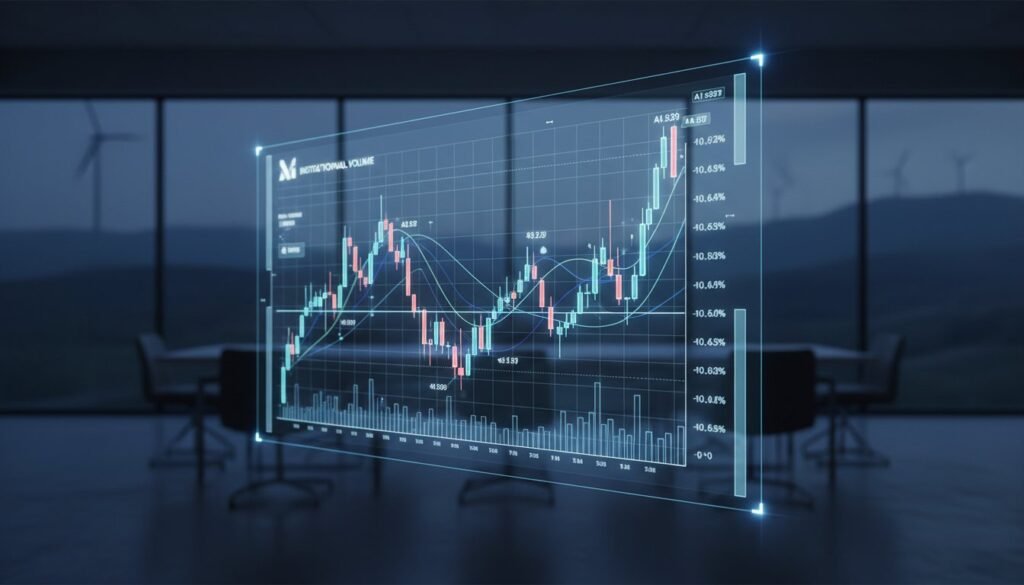
TradingView indicators work differently when they are built the right way. Instead of renting somebody else’s opinion, you are using a visual framework on your own chart. You can see the setup forming, judge market context, and execute with rules instead of hope. For day traders and scalpers in NQ and ES, that difference matters more than most people realize.
TradingView indicators vs signal groups: what changes in real trading?
On paper, both tools are trying to do the same thing. They are trying to help you find trades. But in live market conditions, they shape your behavior in completely different ways.
A signal group pushes information at you from the outside. You wait for someone else to tell you what they see. That creates dependency. Even if the group owner is skilled, you are still reacting to another trader’s process, another trader’s speed, and another trader’s risk tolerance. If they like wider stops than you can handle, or they are trading a style that does not fit prop firm rules, you are already out of sync.
A TradingView indicator, by contrast, sits inside your own workflow. The chart updates in real time. The structure stays consistent. You are not chasing chat messages, trying to decode shorthand, or wondering if the entry was sent late. You are reading the market where you actually trade it.
That shift matters because consistency does not come from random good calls. It comes from repeated decision-making under pressure. If your process depends on somebody else posting alerts all day, you are not building skill. You are borrowing confidence.
Why signal groups feel easier than they really are
Signal groups are attractive for one reason: they reduce effort at the start. If you are overwhelmed, they seem like a shortcut. No chart study, no system building, no figuring out entries. Just wait for a call and click a button.
The problem is that the easy part ends right after the alert arrives. Now you have to decide whether the market already moved too far, whether the stop still makes sense, whether the target is realistic, and whether this trade fits your account size. If the market is moving fast, especially in NQ, those decisions hit you all at once.
That is where signal groups break down for many retail traders. They look simple from the outside, but they still demand judgment on the inside. And because you did not build the setup logic yourself, your judgment is usually weak at the exact moment it matters most.
There is another problem nobody likes to admit. Signal groups often create emotional whiplash. A winning streak makes traders overconfident. A losing streak makes them angry and suspicious. Since they do not own the method, they cannot adapt with discipline. They jump from one group to the next, one guru to the next, one promise to the next. That is how traders stay stuck for years.
Where TradingView indicators have the edge
TradingView indicators are not magic. Bad indicators are everywhere. But a good indicator system gives you something signal groups rarely do: structure you can repeat.
For NQ and ES scalpers, repeatability is everything. You need to know where the setup starts, what confirms it, where the stop goes, and where the trade is no longer valid. If an indicator helps you define those pieces directly on the chart, it removes a huge amount of decision friction.
That is especially useful for traders trying to keep drawdowns low. Prop firm traders do not get paid for excitement. They get paid for discipline. If your chart tools help you avoid sloppy entries and oversized risk, they are doing real work. A clean visual system can keep you focused on high-probability setups instead of taking random stabs because a stranger in a chat room sounded confident.
This is also where TradingView has a practical advantage. If that is already your charting platform, using indicators inside the environment you know is faster than juggling Discord, Telegram, screenshots, and late alerts. Fewer moving parts. Less confusion. Better execution.
The trade-off most traders ignore
Here is the honest answer: TradingView indicators vs signal groups is not just about which one is more accurate. It is about which one makes you more consistent.
A signal group can occasionally hand you a good trade. No question. If the person running it is sharp and the timing is perfect, you may catch a strong move. But that does not mean the approach is building a durable trading habit.
An indicator system asks more from you at the beginning. You need to learn what the signals mean and how they fit your market conditions. That learning curve is real. But once you get through it, you have something much more valuable than a random stream of calls. You have a framework.
That is the trade-off. Signal groups can feel easier now. Indicators can make trading easier later.
TradingView indicators vs signal groups for NQ and ES traders
NQ and ES move differently, but they punish hesitation in similar ways. If you are scalping intraday moves, late information is expensive. That is one reason signal groups often fail these markets. By the time you read the alert, process the message, and place the order, the clean entry may already be gone.
TradingView indicators can help because they show conditions as they develop. You are not waiting for a middleman. You are seeing momentum, structure, trend pressure, or reversal criteria directly on your chart. That gives you a better shot at entering on your terms rather than chasing somebody else’s screenshot after the move starts.
This matters even more when volatility expands. In fast sessions, the best setup might only stay clean for a short window. If your system is visual and rules-based, you can act faster. If your system depends on a group message, speed becomes a liability.
For traders who want a simpler way to trade these markets, this is where a platform-based indicator approach stands out. Quantum Navigator leans into that on purpose: clear chart signals, rules-based structure, and less room for emotional guesswork. That is the right direction for traders who are serious about consistency.
When signal groups can still help
There is one fair use for signal groups. They can be useful as a market awareness tool if you already have your own system. In that case, they are not your edge. They are background information.
That distinction matters. If a signal group supports your process, fine. If it replaces your process, you have a problem.
The same rule applies to indicators, by the way. A chart full of random scripts is no better than a noisy chat room. More tools do not mean more clarity. The whole point is to reduce noise, not decorate it.
What serious traders should choose
If your goal is to become dependent on somebody else’s calls, choose a signal group. If your goal is to read the chart faster, execute with more discipline, and build a trading routine that can survive real pressure, choose a rules-based TradingView indicator setup.
That does not mean every indicator is worth using. It means the right indicator, paired with clear entries, defined stops, and realistic targets, is far more useful than living off borrowed conviction. You need a process you can trust when the market speeds up and your emotions want to take over.
Most losing traders do not need more opinions. They need less noise and more structure. That is why this comparison matters. Trading is already hard enough without adding confusion from chat rooms, delayed calls, and vague trade ideas.
If you are serious about NQ or ES, stop bouncing from alerts to alerts and hoping the next group has the secret. Put the decision-making back on your chart, where it belongs. A clear system will not remove all losses, but it will give you something signal groups rarely can: a repeatable way to think under pressure.
And that is the difference between chasing trades and actually learning how to take them.