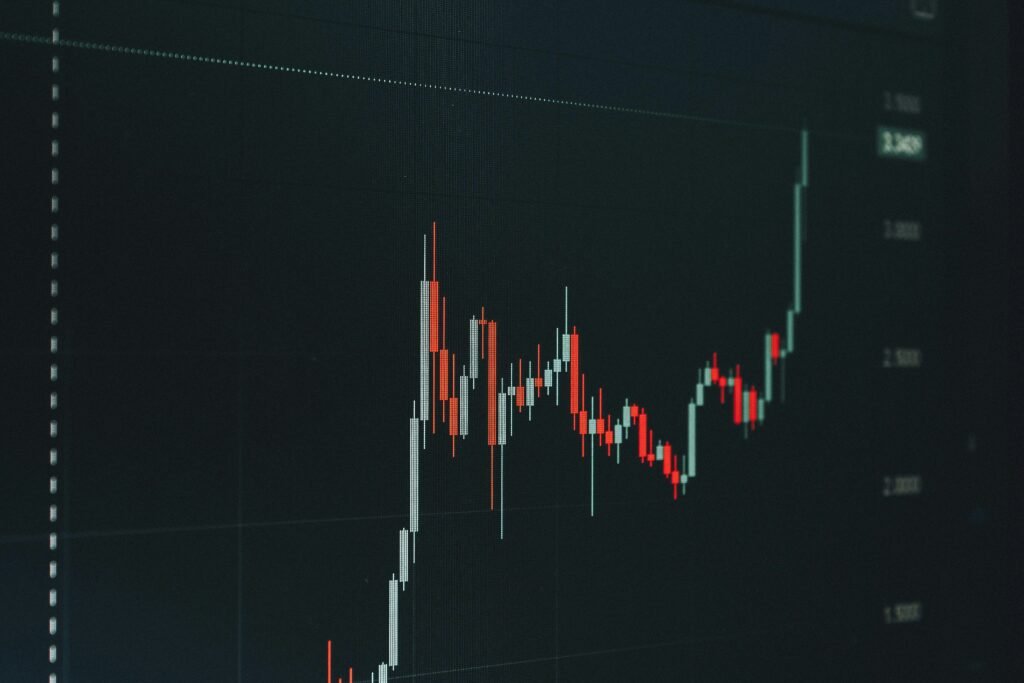
Most traders lose money on NQ for one simple reason – they are making fast decisions in a market that punishes hesitation, noise, and second-guessing.
That is why so many traders ask, how do NQ futures signals work? They want to know whether a signal is just another flashing arrow on a chart or something that can actually help them trade with more control. Fair question. There is a big difference between random alerts and a real rules-based signal process.
If you trade Nasdaq futures, especially on short time frames, signals are not supposed to replace your brain. They are supposed to remove the junk from your decision-making. A good signal system gives you a structured way to spot a setup, define risk, and execute without bouncing from indicator to indicator.
How do NQ futures signals work in real trading?
At the most basic level, an NQ futures signal is a chart-based condition that tells you a trade setup may be forming. That condition can be built from price action, momentum, volatility, trend direction, session behavior, support and resistance, or a combination of those factors.
The signal itself is not the trade. It is the trigger that says, pay attention here.
In a sloppy system, that trigger is vague. It might say the market looks strong or momentum is shifting. That is useless when NQ is moving fast and you have seconds to decide. In a serious system, the signal is tied to clear rules. If price is above a key level, if momentum confirms, if the candle closes with specific structure, and if risk can be defined within your plan, then you have a valid setup. If those conditions are not there, you stay out.
That is how signals are supposed to work. They reduce discretion, not increase it.
What a good NQ signal is really measuring
NQ does not move like a slow market. It snaps, reverses, squeezes, and runs hard once momentum kicks in. Because of that, useful signals usually focus on a few core things.
First, they measure direction. You need to know whether the market is likely pushing with trend, pulling back within trend, or rotating in a range. Taking breakout signals inside dead chop is how traders burn through accounts.
Second, they measure timing. A market can be bullish overall and still be a terrible long right now. Good signals help answer the only question that matters in the moment: why this entry, at this price, right now?
Third, they define risk. If a signal does not tell you where the trade is wrong, it is not a signal. It is a suggestion. Serious traders need a stop level that makes sense relative to structure, volatility, and account size.
Fourth, they give you a path to profit. That does not mean every signal predicts the exact top or bottom. It means the setup includes a logical target area or at least a framework for scaling and managing the trade.
This is where many retail traders get trapped. They obsess over finding an entry signal but ignore the rest. Entry without stop placement and target logic is just organized gambling.
The parts inside most NQ futures signal systems
If you strip away the marketing, most NQ signal systems are built from a few moving parts.
One part identifies market context. That can be trend bias, session range, VWAP positioning, prior highs and lows, or a higher time frame directional filter. This matters because the same pattern can behave very differently depending on where it shows up.
Another part identifies the setup. Maybe that is a pullback into trend, a breakout from compression, a rejection from a key level, or a reversal after an exhaustion move. The setup gives the signal its shape.
Then comes the trigger. This is the actual event that tells you to enter or prepare to enter. It could be a candle close, a momentum confirmation, a reclaim of a level, or a break of structure.
After that comes trade management. That includes stop placement, first target, runner logic, breakeven rules, and when to ignore a late entry. Without this part, most traders either cut winners too early or let losers drift.
The best systems keep these pieces simple. No fluff. No magic. No ten-indicator circus. Just context, setup, trigger, and management.
Why NQ traders rely on signals in the first place
NQ is fast enough to expose every weakness in your execution. If you hesitate, you get a worse fill. If you chase, you buy the top. If you move your stop, NQ will often make you pay for it immediately.
Signals help because they create structure before the market starts moving. Instead of reacting emotionally, you already know what you are looking for. That alone can improve consistency.
This matters even more for prop firm traders. If your goal is to pass an evaluation or protect a payout account, you cannot afford random entries and oversized losses. You need low drawdown behavior, repeatable setups, and quick decision rules that keep you from freelancing.
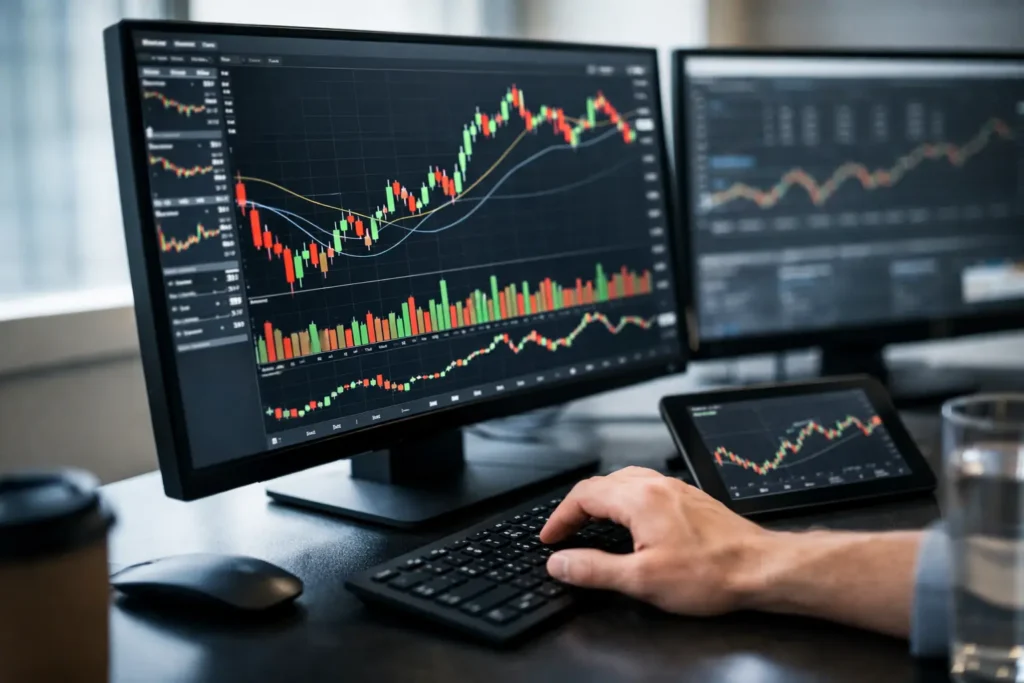
That is also why chart-based signal tools on TradingView have become so popular. Traders want something visual and fast. They want to see where the setup is, where the stop goes, and where the target makes sense without digging through a pile of conflicting opinions.
How signal quality separates serious tools from junk
Not all signals deserve your attention. Some are late. Some repaint. Some fire too often. Some look amazing in screenshots and fall apart in live conditions.
A useful NQ signal should be specific, repeatable, and easy to verify on the chart. You should be able to answer a few basic questions fast. What condition created this signal? Where is the invalidation? Is this aligned with market context? Is the reward worth the risk?
If you cannot answer those questions, you are not looking at a trading edge. You are looking at noise with better branding.
This is also where traders need to be honest. A signal can be valid and still lose. That is normal. No signal system wins every trade. The goal is not perfection. The goal is a repeatable process with a positive expectancy over a series of trades.
That means trade selection matters. Session timing matters. News timing matters. Your own discipline matters. Signals can tighten your execution, but they cannot save you from breaking your own rules.
How to use NQ futures signals without becoming dependent on them
The smart way to use signals is as a framework, not a crutch.
Start by understanding what the signal is built to catch. Is it a trend continuation setup? A breakout setup? A reversal setup? If you do not know that, you will misuse it. Traders get hurt when they treat every signal as universal.
Next, match the signal to the session and market condition. NQ during the open behaves differently than NQ at midday. A breakout signal in high momentum can work beautifully. The same signal during lunch chop can be a complete waste.
Then focus on execution quality. That means waiting for confirmation, placing the stop where the setup is invalidated, and refusing to widen risk because you hope the market comes back.
This is where a rules-based workflow changes everything. Instead of asking, what do I feel about this move, you ask, does this meet the criteria? If yes, execute. If no, skip it. That shift is what starts turning emotional traders into consistent traders.
For traders using tools from Quantum Navigator, the appeal is exactly that – a cleaner process built for fast futures execution on TradingView, without all the nonsense and noise that usually clutters decision-making.
What signals can and cannot do for you
Signals can help you find higher-probability trade locations. They can help you standardize entries. They can help you control risk. They can absolutely reduce the chaos that destroys most retail traders.
What they cannot do is remove uncertainty from trading. They cannot make you profitable if you ignore risk. They cannot fix overtrading. They cannot stop you from taking revenge trades after a loss.
That is the part many traders do not want to hear, but it is the truth. A signal is only powerful when it lives inside a complete plan.
If you are asking how do NQ futures signals work, the real answer is this: they work by turning market conditions into clear trade rules. They tell you when a setup is present, where the trade is wrong, and where profit may be taken. When those rules are simple, visual, and repeatable, traders make better decisions faster.
And in NQ, faster and cleaner decisions are not a luxury. They are the whole game.
The traders who last are not the ones chasing the loudest indicator or the newest guru trick. They are the ones who build a process they can trust, then follow it with discipline when the market starts moving.