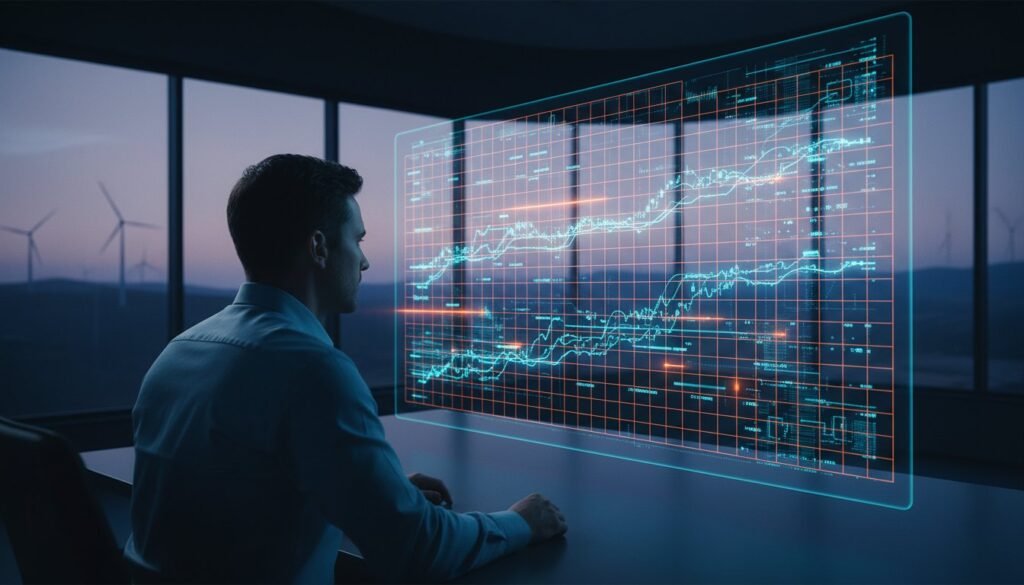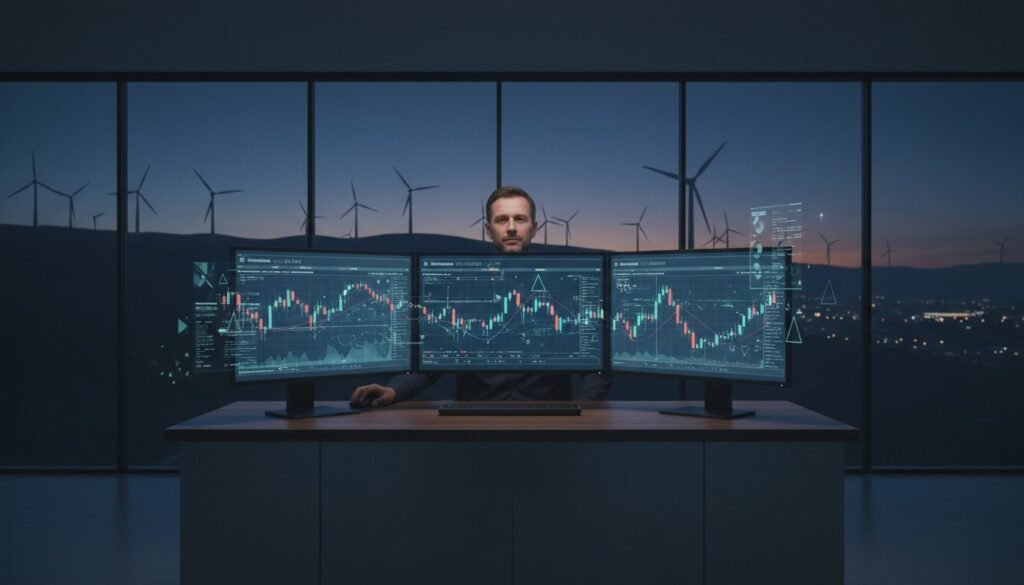
In the dynamic landscape of financial markets, the pursuit of efficiency and systematic advantage has led to the increasing adoption of automation in futures trading. This article explores the methodologies, benefits, and challenges associated with automating futures trading, providing a factual overview for those considering or already engaged in this sophisticated approach.
Automated futures trading, often referred to as algorithmic trading or algo trading, involves the use of computer programs to execute trades based on predefined rules and parameters. These systems bypass human intervention in the execution phase, aiming for speed, precision, and the elimination of emotional biases inherent in manual trading.
Defining Algorithmic Trading
Algorithmic trading encompasses a broad spectrum of strategies, from simple order routing to complex quantitative models. The core principle remains the same: instructions are coded into a program that interacts directly with exchange order books. This automation is not merely about speed; it’s about consistency and the ability to process vast amounts of data in real-time.
Evolution of Trading Technology
Historically, futures trading relied on floor brokers and open outcry. The advent of electronic exchanges marked a significant shift, paving the way for automated systems. Early systems were relatively basic, primarily focused on order entry. Today, platforms are capable of high-frequency trading (HFT), market making, and complex arbitrage strategies, executing thousands of orders per second. This evolution mirrors the broader technological advancements in computing power and network infrastructure.
For those interested in exploring the world of futures trading automation, a highly informative article can be found at QN Trader. This resource delves into the various strategies and technologies that can enhance trading efficiency and profitability, making it an essential read for both novice and experienced traders looking to leverage automation in their trading practices.
Key Components of an Automated Trading System
A robust automated futures trading system is a complex ecosystem of interconnected components, each playing a crucial role in its overall functionality and performance.
Data Feed and Infrastructure
The lifeblood of any automated system is reliable and low-latency market data. This includes real-time bid/ask prices, trade data, and historical data for backtesting. Data infrastructure necessitates high-speed internet connections, redundant data sources, and robust servers to ensure uninterrupted access. Imagine this data as the fuel for your trading engine; without a consistent, high-quality supply, the engine cannot run optimally.
Trading Strategy Logic
At the heart of the system lies the trading strategy, translated into a set of executable rules. These rules dictate when to buy, sell, or hold a particular futures contract. Strategies can range from simple technical indicator crossovers to sophisticated statistical arbitrage models. The logical construction of these rules is paramount, as flaws here will propagate throughout the system’s performance.
Order Management System (OMS)
The OMS is responsible for managing the lifecycle of orders. It receives signals from the trading strategy, constructs the actual order (specifying contract, quantity, price limits), and transmits it to the exchange. It also tracks open orders, fills, and cancellations, ensuring compliance with exchange rules and managing positions accurately.
Execution Management System (EMS)
The EMS focuses on the optimal execution of orders. This can involve smart order routing, which directs orders to the best available liquidity across multiple venues, or execution algorithms designed to minimize market impact, such as VWAP (Volume Weighted Average Price) or TWAP (Time Weighted Average Price). The EMS acts as the hands of the trading system, patiently and precisely executing the strategy’s directives.
Risk Management Module
A critical, non-negotiable component is the risk management module. This module monitors various risk parameters in real-time, such as maximum drawdown, position limits, exposure to specific contracts, and overall portfolio risk. It can trigger automatic shutdowns or reduce exposure if predefined risk thresholds are breached, acting as the system’s safety net and preventing catastrophic losses.
Advantages of Automated Futures Trading

The drive towards automation in futures trading is underpinned by several compelling advantages that human traders often struggle to replicate consistently.
Elimination of Emotional Bias
Human traders are susceptible to emotions like fear and greed, which can lead to irrational decisions. Automated systems operate impassively, executing trades strictly based on their programmed logic, regardless of market sentiment or personal psychological state. This consistency is a cornerstone of systematic trading.
Speed and Efficiency
Automated systems can process information and execute trades within microseconds, a speed far beyond human capabilities. This is particularly advantageous in fast-moving markets or for strategies that rely on capturing fleeting opportunities. The market is a river; automated systems are high-speed boats, while manual traders might be rowing rafts.
Backtesting and Optimization
Before deployment, automated strategies can be rigorously backtested against historical data. This allows traders to evaluate a strategy’s hypothetical performance under various historical market conditions and to optimize parameters for improved outcomes. This iterative process of testing and refinement is a distinct advantage over intuitive, discretionary trading.
Diversification and Scalability
Automated systems can simultaneously manage multiple strategies across diverse futures markets. This allows for portfolio diversification, potentially reducing overall risk. Furthermore, once a system is built, it can be scaled to handle larger capital amounts or more complex portfolios without a proportional increase in human effort.
Challenges and Considerations

While offering significant benefits, automating futures trading is not without its challenges and requires careful consideration.
Technical Complexity
Developing and maintaining an automated trading system demands considerable technical expertise in programming, data management, and network infrastructure. It’s an engineering endeavor as much as a financial one.
Data Quality and Latency
The reliability of the system hinges on the quality and speed of its data feed. Issues like data corruption, gaps, or excessive latency can lead to incorrect decisions or missed opportunities. Ensuring clean, high-speed data is an ongoing operational challenge.
System Failure and Bugs
Like any complex software, automated trading systems are susceptible to bugs, glitches, or unexpected hardware failures. Even minor errors can have significant financial consequences. Robust testing, redundancy, and fail-safes are crucial to mitigate these risks.
Market Microstructure Nuances
Automated systems must contend with the intricacies of market microstructure, including bid-ask spread dynamics, order book depth, and various order types. A strategy that performs well in simulations might struggle in live markets due to these subtle, yet impactful, factors.
Regulatory Compliance
Automated trading is subject to evolving regulatory scrutiny. Compliance with rules regarding market manipulation, order routing, and capital requirements is essential. Failure to adhere to these regulations can result in severe penalties.
Futures trading automation has become increasingly popular among traders looking to enhance their strategies and improve efficiency. For those interested in exploring this topic further, a related article can be found that delves into the various tools and techniques available for automating trades. This resource provides valuable insights into how automation can streamline the trading process and potentially increase profitability. To learn more about these innovative approaches, you can check out the article here: futures trading automation.
Building and Implementing an Automated System
| Metrics | Data |
|---|---|
| Number of automated trades | 1000 |
| Percentage of profitable automated trades | 75% |
| Time saved through automation | 50 hours per week |
| Accuracy of automated trades | 95% |
The journey from concept to a live automated trading system involves several distinct phases, each requiring meticulous attention to detail.
Strategy Development and Research
This initial phase involves identifying trading ideas, formulating hypotheses, and translating these into quantifiable rules. This can involve researching existing academic papers, exploring technical indicators, or developing novel statistical models. The clearer the strategy, the easier it is to translate into code.
Backtesting and Simulation
Once a strategy is designed, it must be thoroughly backtested against historical data to evaluate its hypothetical performance, profitability, and risk characteristics. This process involves simulating trades as if they occurred in the past. It’s important to avoid common pitfalls like overfitting, where a strategy performs exceptionally well on historical data but fails in live trading due to excessive optimization to past patterns. Walk-forward optimization and out-of-sample testing are crucial.
Paper Trading and Live Testing
Before deploying capital, it is imperative to paper trade (or simulate live trading) the system in a real-time environment using actual market data but without actually placing orders for money. This phase helps to identify operational issues, data feed problems, and discrepancies between backtested and live performance. Once satisfied, a small amount of capital can be deployed for live testing, gradually increasing exposure as confidence grows.
Monitoring and Maintenance
Deployment is not the final step; it is merely the beginning of continuous monitoring and maintenance. The system needs constant oversight to ensure it is operating as intended, identifying potential issues with data feeds, exchange connectivity, or unexpected market conditions that might impact strategy performance. Markets are dynamic; a strategy that works today might require adjustments tomorrow. This is where the analogy of the system as a living organism holds true; it needs care and attention to thrive.
In conclusion, automating futures trading offers a powerful avenue for achieving efficient and systematic results. By leveraging technology, traders can mitigate emotional biases, execute with unparalleled speed, and rigorously test their strategies. However, it demands a significant investment in technical expertise, robust infrastructure, and continuous vigilance. For those willing to navigate its complexities, automated futures trading represents a sophisticated and potentially rewarding approach to navigating the futures markets.
FAQs
What is futures trading automation?
Futures trading automation refers to the use of computer programs and algorithms to execute trades in the futures market without the need for manual intervention. This technology allows for faster execution of trades and can be used to implement trading strategies based on predefined criteria.
How does futures trading automation work?
Futures trading automation works by using computer programs to analyze market data, identify trading opportunities, and execute trades based on predefined rules and parameters. These programs can be set to automatically enter and exit trades, manage risk, and adjust positions based on market conditions.
What are the benefits of futures trading automation?
Some of the benefits of futures trading automation include increased speed of trade execution, the ability to implement complex trading strategies, reduced emotional decision-making, and the ability to trade across multiple markets and time zones without constant monitoring.
What are the risks of futures trading automation?
Risks associated with futures trading automation include the potential for technical glitches or system failures, the need for continuous monitoring and maintenance of the automated systems, and the risk of losses due to market volatility or unexpected events.
What are some popular futures trading automation platforms?
Some popular futures trading automation platforms include NinjaTrader, TradeStation, MetaTrader, and Interactive Brokers. These platforms offer a range of automated trading tools and features for traders to implement their strategies in the futures market.